As an assistant professor of strategic management at Rice University, I examine how new ventures and emerging industries come to be understood and accepted by customers, investors, and other stakeholders.
I focus on social innovations such as clean cookstoves, water treatment technologies, and biodegradable sanitary products, studying how they are developed and scaled in contexts like East Africa and India. Using mixed methods, I aim to understand how markets form around innovations intended to improve lives. My research has been published in Organization Science and the Strategic Management Journal.
I care deeply about the role of businesses in addressing social inequality, environmental sustainability, and international development. Before academia, I co-founded Essmart, a social enterprise that supports the adoption of life-improving technologies in rural India. That experience continues to shape the questions I ask in my research. You can learn more about me in this video published by Rice Business.
I teach advanced strategic management to both undergraduates and full-time MBA students at Rice Business (BUSI 431 and MGMT 571, respectively). I have been recognized as one of Poets&Quants Best 40 Under 40 Business Professors.
I received my SB in Economics and SB in Urban Planning from MIT and my Master in City Planning (international development) from MIT. I completed my PhD in Strategy and Sociology at the University of Michigan. Please feel free to reach out at diana.jue-rajasingh@rice.edu.
Research
Publications
Second-Order Knowledge Intermediaries and Multi-Country Entrepreneurial Entry into a Nascent Industry
Organization Science, 36(6):2435-2458
From Margins to Mainstream: The Narrative Dilemma in Scaling Social Ventures
Strategic Management Journal, 46(11):2690-2719
When “Less Is More”: How Statistical Discrimination Can Decrease Predictive Accuracy
Organization Science, 34(4):1383-1399
Addressing the Market Failures of Environmental Health Products
Chapter in the Handbook on the Business of Sustainability: the Organization, Implementation, and Practice of Sustainable Growth, pp. 516-543
Operational strategies for distributing durable goods in the base of the pyramid
Manufacturing & Service Operations Management, 24(4):1887-1905
Work in progress
Framing the Hustle: Experimental Evidence from Motivating Recycling in Lagos, Nigeria
Revise and Resubmit
In Purpose We Trust: Why Blue- and White-Collar Workers Respond Differently to Expressions of Corporate Purpose
Working Paper
Broadening Without Displacement: How Mission-Oriented Industries Sustain Parallel Templates
Working Paper
New Ventures' Strategic Use of Social Impact Framing in Interfirm Relationships
Working Paper
Managing Marginalized Religious Entrepreneurial Identity for the Creation of New Markets
Data Collection
Foundations, Philanthropy, and Industry Emergence
Data Collection
Carbon Credits and Disclosure
Data Collection
Cross-Sector Partnership Formation
Model Development
Social Bias, Reputation, & Employment Outcomes in Online Labor Platforms
Data Analysis
Teaching
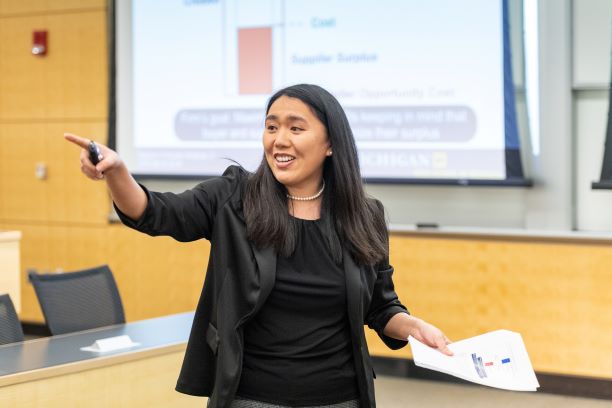
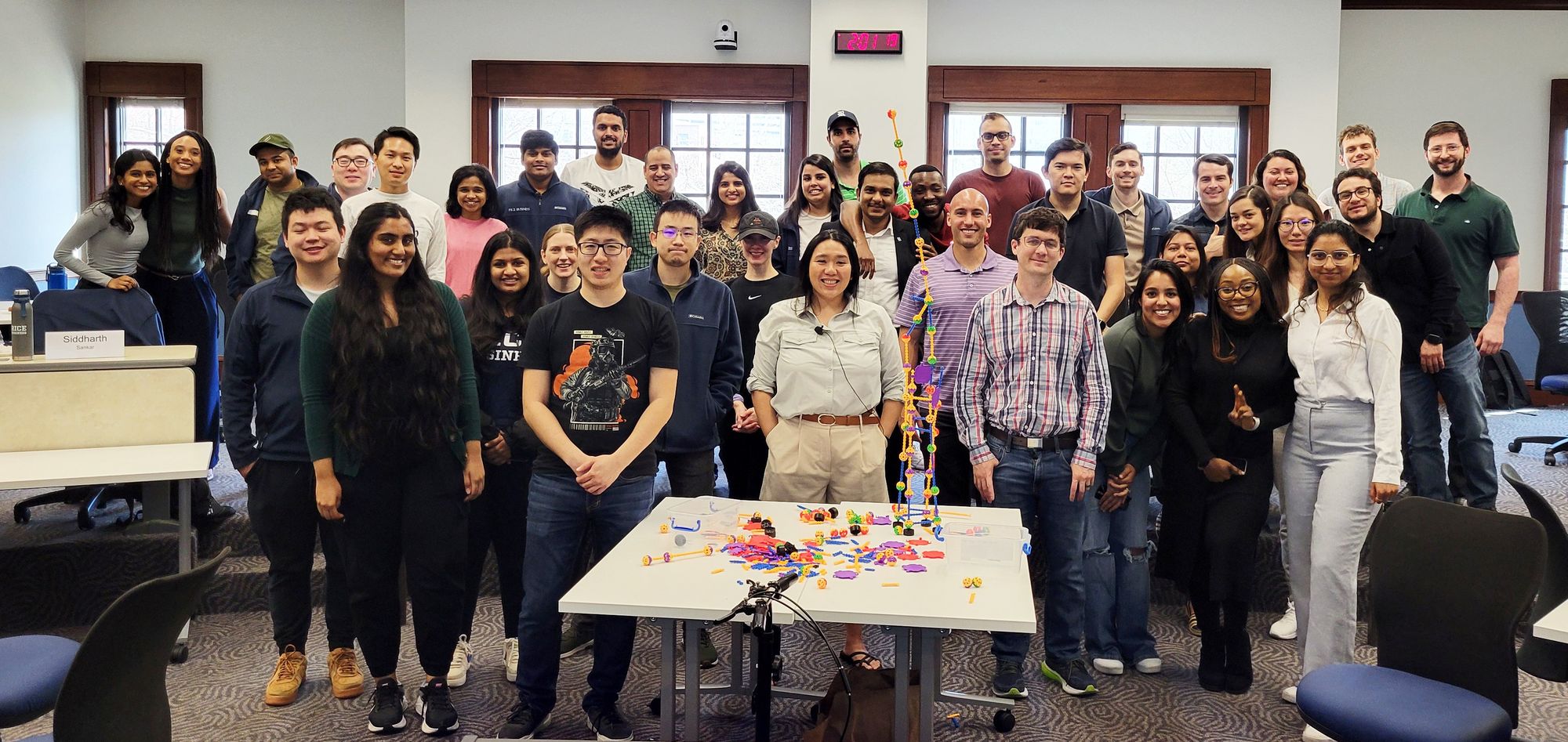
I teach advanced strategy classes for full-time MBA and undergraduate students at Rice University. At the University of Michigan, I taught corporate strategy and business strategy for undergraduates.
I have been recognized as a Poets&Quants 40 Under 40 Best Business Professors. You can read my profile, in which I share about my journey and approach to teaching, here.
In a Poets&Quants for Undergrads column, one of my BBA students at the University of Michigan named my class as one of the "5 Most Impactful Business Classes" she had taken. You can read her reflections and an interview with me here.
I enjoy mentoring students, and I have been recognized as a Rice Career Champion and a Rice Outstanding Undergraduate Research Mentor.
Practice
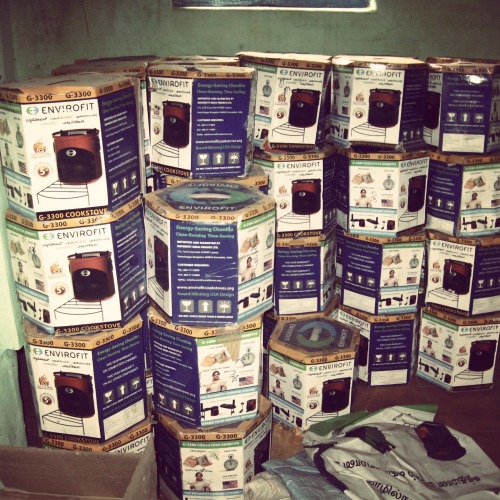
To the left is a photo of dusty, unopened improved biomass cooking stoves that were supposed to reduce indoor air pollution. I took it in Tamil Nadu, India where I was conducting field research on the distribution of life-improving technologies.
Of the different models that I saw, none were working exceptionally well. Nonprofit organizations gave products away at a subsidized price, and customers didn’t value them. Village level entrepreneurs were difficult to find, unreliable, and hard to scale. Brick-and-mortar stores required too much upfront financing. Most organizations were still pitching these technologies as products for poor people – an unattractive sales strategy.
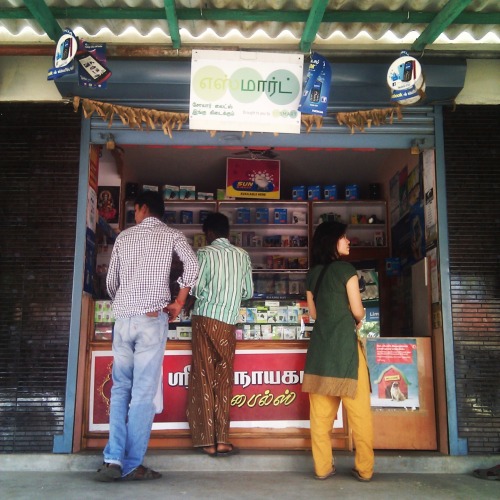
I co-founded Essmart to address these problems. The social enterprise creates an essential marketplace for these technologies in places where people already buy their goods -- small stores near where they live. We demonstrate a catalogue of products, distribute to local mom-and-pop stores, and facilitate manufacturers’ warranties. From August 2012 to August 2016, I oversaw operations in southern India. To date, Essmart has positively impact over 1.1 million people people through our network of shops.
Here are Essmart's website and Facebook page.
Selected Recognitions
Academic Recognitions
- Poets&Quants Best 40 Under 40 Business Professor
- Rice Business Award for Excellence in Research (Untenured Faculty Research Award)
- IIT Madras & Rice University Strategic Partnership Collaboration Award
- SMS Responsible Research Prize (Finalist)
- AOM IM Division Dissertation Award (Finalist)
- ISA Giarratani Rising Star Award (Runner Up)
- Douglas Nigh Best Paper in Multidisciplinary Research Award
- Responsible Research in Business & Management Dare to Care Dissertation Scholarship
- Colorado State University's Business for a Better World Dissertation Proposal Competition Winner
- Strategic Research Foundation Dissertation Research Grant
- Kauffman Knowledge Challenge Student Grant (with Yun Ha Cho and Reuben Hurst)
- Flamholtz Award for Entrepreneurship Research
- C.K. Prahalad Research Grant
- Dow Sustainability Fellowship
- Fulbright-Nehru Research Fellowship to India
- American Institute of Certified Planners (AICP) Outstanding Student Award
Professional Recognitions
- Forbes 30 Under 30 Social Entrepreneur
- Cartier Women's Initiative Awards Laureate for Asia-Pacific Region
- Echoing Green Fellowship for Social Entrepreneurs
- Grinnell College Innovator for Social Justice Prize
- USAID Development Innovation Ventures Grant
- D-Prize for Distribution
- Dell Social Innovation Challenge Grand Prize
- MIT IDEAS Global Challenge First Prize